
Fuel flexibility crucial to minimise risk as Telecoms industry moves to a zero carbon future
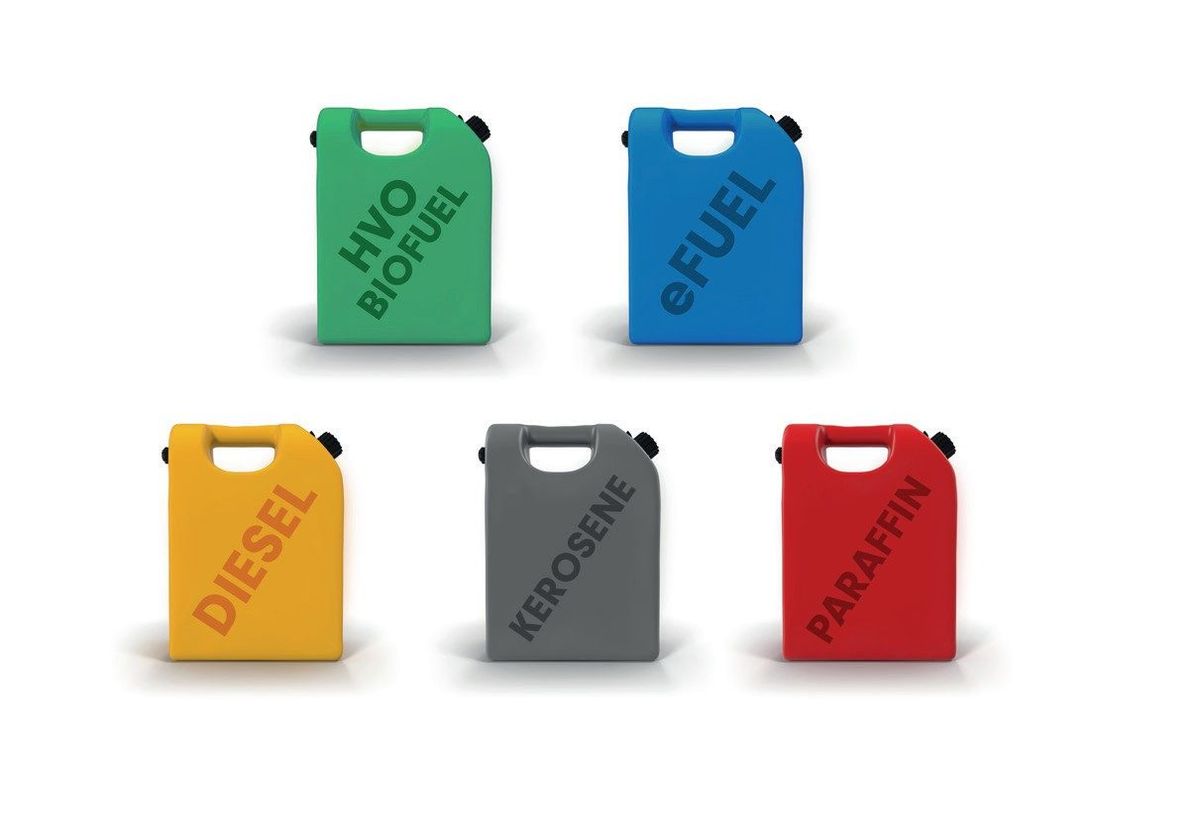
As telecoms operators chase net zero targets, the choice of fuel for off-grid and bad-grid power carries real commercial risk, and flexibility looks like the safest hedge.
Every sector of the economy was, at the time of writing, moving toward carbon neutrality. The pressure came from several directions at once: society expected it, customers increasingly demanded it, and environmental, social and governance (ESG) reporting made it a board-level metric rather than a marketing line. Telecoms was no exception, and arguably had more reason than most industries to move quickly.
The scale of the challenge was significant. Information and communication technology (ICT) was estimated to account for 3 to 4% of global carbon emissions at the time, but forecasts suggested this could rise as high as 14% of global emissions by 2040 if left unchecked. Much of that growth was tied to the rollout of 5G: the 5G ecosystem was projected to drive a 160% increase in power demand by 2030, as denser networks of smaller cells multiplied the number of sites drawing power around the clock.
Nowhere was this tension sharper than at off-grid and bad-grid sites, where towers had no reliable access to a national grid, or where the grid that did exist was too unstable to depend on. These sites remained overwhelmingly diesel-dominated. Diesel gensets were cheap to buy, well understood by technicians, and available in almost every market in the world. But as the industry's carbon targets tightened, that dependency became a liability rather than a convenience, and operators had to start asking what would replace it.
“The mobile industry is one of the first major sectors in the world to voluntarily set a science-based target for emissions reduction”
Assessing the risks
Choosing a fuel strategy for the next decade was not simply a technical decision, it was a risk management exercise, and the risks ran in more than one direction. Early adopters of a new fuel or technology risked committing capital to a solution that failed to scale, or that was overtaken by a cheaper or more available alternative within a few years. Late adopters risked being locked into diesel infrastructure while competitors captured the reputational and, increasingly, regulatory advantages of moving first.
Both paths were capital intensive. Power infrastructure at a tower site was not a purchase made lightly or replaced often, so a wrong turn was expensive to unwind, whichever direction it took. Compounding this, telecoms operators typically did not control the fuel infrastructure they would need to depend on. A tower company could choose to run on HVO or biogas, but it could not build the refining, storage and distribution network required to get that fuel to a remote site reliably. It was dependent on third parties whose investment decisions it could not influence and whose timelines it could not control.
Government policy added a further layer of uncertainty. Subsidies, blending mandates and emissions regulations differed from country to country and could change with a change of government, altering the economics of a given fuel choice with little warning. And underneath all of this sat logistics, which was in many ways the decisive factor. A fuel that performed perfectly in an engine test cell could still fail commercially if it could not be delivered cost-effectively to a remote site. The cost of getting fuel to a tower in the first place, particularly across the difficult terrain and long distances typical of off-grid deployments, often mattered more than the fuel's price at the point of production.
Potential fuel options
The scale of investment required to move the energy system as a whole was substantial. The International Energy Agency's position, at the time, was that clean energy investment needed to more than triple by 2030, rising to around $4 trillion a year, if the world was to stay on track for net zero. Against that backdrop, telecoms operators were weighing up a genuinely wide field of fuel options, each with its own trade-offs.
Diesel remained the incumbent, and it was worth acknowledging that it had not stood still. Successive emissions standards had cut CO, CO2, particulate matter and NOx from diesel engines markedly compared with older generations of equipment. But diesel still carried commodity price exposure that operators could not hedge away, and its direction of travel, both in terms of public perception and regulation, was firmly against it.
Biodiesel blends offered one alternative route. FAME (fatty acid methyl ester) was available in volume in some markets, particularly across Asia, but it was challenging for piston engines to run reliably, especially at higher blend ratios, and its cold-weather and storage properties added further operational complexity. HVO (hydrotreated vegetable oil), by contrast, was a genuine drop-in replacement for diesel, requiring no engine modification, but it remained constrained by the availability of suitable feedstock, which limited how far and how fast it could scale to meet global demand.
Biogas, derived from waste, could be effectively carbon neutral over its lifecycle, since the carbon it released had recently been absorbed from the atmosphere rather than extracted from the ground. Its limitation was one of scale: the volumes of biogas that could realistically be collected and processed fell well short of what would be needed to power a global network of towers.
Hydrogen attracted a great deal of attention, but was, realistically, still years away from wide availability at the point of use. Compressing hydrogen to a usable density consumed a significant amount of energy in itself, and its poor energy density per tanker load compared with liquid fuels meant that a remote site relying on hydrogen delivered by road would need far more frequent, and far more expensive, deliveries than one running on a liquid fuel. In the meantime, remote sites needed a liquid alternative they could actually get hold of.
Renewables, principally solar with battery back-up, were a viable and increasingly common solution for smaller installations, where modest and predictable loads could be met from a panel array sized to match. As the power requirement of a site increased, however, the economics and the physical footprint required to keep pace with demand using renewables alone became progressively harder to justify.
Reducing the risks
Given that no single fuel solved every problem, and that operators could not control the fuel infrastructure available to them in any given market, flexibility looked like the most sensible answer to the risk. A power source that could run on more than one fuel, and that could be switched between fuels without a wholesale equipment replacement, meant an operator was not betting the network on a single fuel supply chain materialising on schedule.
The Bladon microturbine generator was designed with exactly this in mind. It was fuel agnostic, and its modular combustor could be changed on site in under an hour in most cases. That mattered because it meant an operator was not locked into whatever fuel happened to be available, or affordable, in a given country at the time of installation. If the fuel market shifted, whether through a change in government policy, a change in feedstock availability, or simply a better commercial deal on a different fuel, the same base machine could be adapted rather than replaced, avoiding the stranded assets that a fixed, single-fuel investment risked becoming.
For tower companies and energy service companies operating across many sites and often across multiple countries, this had a further benefit: one base machine could serve as a single-supplier, multi-site solution, regardless of which fuel was locally available at any given tower. Rather than qualifying and stocking spare parts for several different generator types to match several different fuel strategies, an operator could standardise on one machine and let the fuel vary by site.
“Our sector will form the backbone to the future global economy and has a unique role to play in reaching a net zero economy. A decarbonised world will be a digital world, so we must show leadership and take responsibility for driving positive climate change action.”
“The days of diesel ruling all, are over.”
The industry's direction was clear even if the precise fuel mix of the future was not. What mattered for operators making capital decisions today was not guessing correctly which single fuel would win, but ensuring that whatever they invested in now could adapt as the answer became clearer, without leaving them stranded on the wrong side of that bet.
This article is part of the Bladon archive and reflects the position at the date of publication.